Key Takeaways
- The most common surprise after implant surgery is how little pain there is. Most patients report only mild soreness that fades within a day or two.
- Recovery has two phases: a short visible phase (swelling and tenderness, resolving in 1-2 weeks) and a long invisible phase (osseointegration, 3-6 months, with no discomfort).
- Best suited for patients who are delaying implants out of fear of recovery, or who want a realistic, day-by-day picture before scheduling.
- Consultations are available to discuss individual healing factors and a personalized recovery plan, contact the practice for a consultation.
- Every implant case at J. Ladd Williams Cosmetic Dentistry in Mesa, AZ is planned with Cone Beam 3D imaging, which tends to produce smoother, less traumatic recoveries than 2D-guided placement.
The single most common question patients ask before a dental implant is about pain. After thousands of implants placed over more than three decades in Mesa, Dr. J. Ladd Williams offers this direct answer: “Most patients are very surprised how painless the actual recovery is. Most report very little soreness after the first day.”
Implant placement is still a surgical procedure with a real recovery timeline. But the gap between what patients fear and what they actually experience is one of the most consistent observations from the practice’s implant caseload. This article walks through what implant recovery actually feels like day by day, week by week, so patients can plan with realistic expectations.
Day Zero: The Day of Surgery
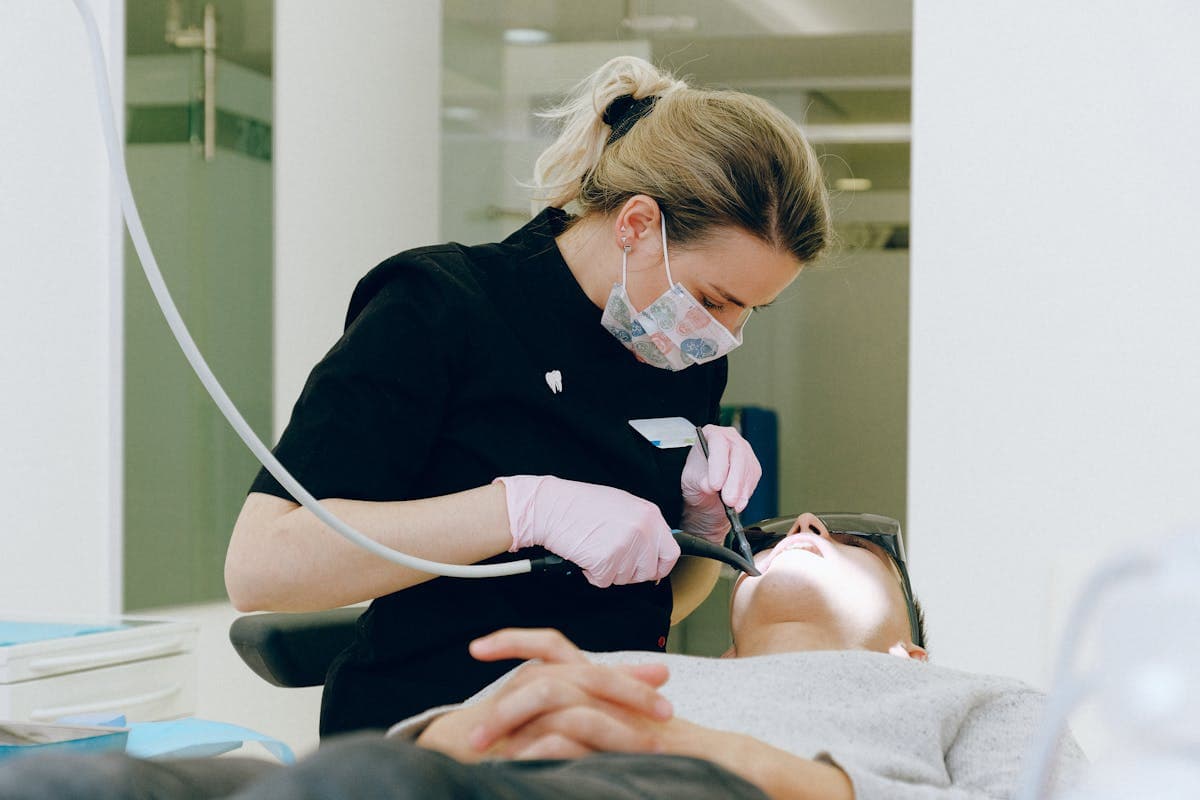
The surgical placement itself is performed under local anesthesia, often with sedation options when patients prefer. Patients do not feel pain during the procedure. Placement of a single dental implant typically takes 30 to 60 minutes; more complex cases like All-On-4 full-arch implants take 2-4 hours per arch.
After surgery, the local anesthetic gradually wears off over a few hours. Most patients describe what they feel during that transition as pressure or tenderness, not sharp pain. A combination of over-the-counter anti-inflammatory medication (such as ibuprofen) and cold compresses on the cheek typically manages whatever discomfort arises. Prescription pain medication is available when needed but is often not required.
What to expect on day zero:
- Mild swelling at the surgical site
- A small amount of oozing or pink saliva (normal for 24 hours)
- Numbness fading gradually over 4-6 hours
- Mild jaw stiffness
- Need for a soft-food diet (cold foods are often most comfortable on day one)
Days 1-3: The Peak (And Why It’s Usually Less Than Patients Expect)
Swelling typically peaks at 48-72 hours after surgery, then begins to subside. Bruising at the cheek or jawline is normal and reflects the body’s healing response. It isn’t a complication.
The honest reality from thousands of cases: patients usually describe day one as the most uncomfortable, but “uncomfortable” rarely means severe pain. The most common descriptions patients give the practice are:
- “It feels like I’m sore the day after a workout”
- “It feels like a tooth got pulled, but less”
- “I expected it to be worse”
- “I forgot to take the pain medication and it was fine”
By the end of day two or three, most patients are back to normal daily activities. Office work, light exercise, and social events are all typically feasible. The practice recommends avoiding strenuous physical activity, heavy lifting, and bending over for about a week, because increased blood pressure to the head can disturb the clot at the surgical site.
Days 4-14: Quiet Healing
By the end of the first week, most patients have forgotten they had surgery. Some mild tenderness at the implant site may persist, particularly when biting on that area, but it doesn’t interfere with daily life. The soft-tissue healing, gums knitting back together over and around the implant, happens during this window.
During this phase:
- Continue with a soft-food diet, gradually adding firmer foods as tolerated
- Use a saline rinse 2-3 times daily to keep the surgical area clean
- Brush around the implant site gently, full normal brushing once the dentist clears it
- Avoid drinking through a straw for the first week (suction can disturb healing)
- Avoid smoking, which significantly impairs implant healing
Most single-implant patients return for a follow-up around day 7-10 to confirm healing is progressing normally and to remove any sutures.
Weeks 2-12: Osseointegration (The Invisible Healing)
This is the longest phase of implant recovery, but also the easiest from the patient’s experience. There’s almost nothing to feel because almost everything happening is microscopic. During this 3-6 month window, the titanium implant fuses with the surrounding jawbone in a process called osseointegration. It’s what gives implants their permanent stability and decades-long lifespan.
Patients can generally expect:
- Normal eating, speaking, and function, often with a temporary crown or restoration in place if the implant is visible
- No ongoing pain or discomfort
- One or two brief follow-ups to confirm healing is on track
- Smoking, uncontrolled diabetes, and certain medications can slow or impair osseointegration. The practice discusses any concerns at the consultation.
The body is doing the real work during osseointegration. The patient’s job is mainly to maintain good oral hygiene and avoid disturbing the area. For most people, those few months pass without any awareness of what’s happening internally.
Final Restoration Day: A Routine Visit
Once osseointegration is complete, the abutment (connector piece) and the final porcelain crown are placed. This appointment is routine, no surgery, no anesthesia required for most patients, and no recovery beyond getting used to the new tooth, which usually happens within hours.
By the time patients leave that visit, they have a permanent, fully functional tooth. Most note that their final restored tooth feels almost identical to a natural tooth, and that they had no idea the result would feel this normal.
Recovery Timeline at a Glance
| Phase | Duration | What it feels like | Activity level |
|---|---|---|---|
| Day 0 (surgery day) | A few hours | Pressure, mild swelling, gradual return of sensation | Rest at home |
| Days 1-3 | 2-3 days | Peak swelling; mild soreness; often less than patients expect | Light activity OK |
| Days 4-14 | ~2 weeks | Minimal awareness; soft-tissue healing | Normal activities |
| Weeks 2-12+ | 3-6 months | No discomfort; osseointegration is invisible | Fully normal life |
| Final crown placement | 1 visit | Routine; no recovery required | Immediate normal |
What Makes Some Recoveries Harder Than Others
Most patients have a smoother recovery than they expect, but a small percentage have a more involved experience. The factors that tend to predict a harder recovery:
- Smoking: significantly impairs healing and increases discomfort
- Uncontrolled diabetes: slows tissue repair
- Bone grafting performed alongside placement: adds to the surgical scope
- Multiple implants placed in one session: more swelling, longer initial recovery
- Pre-existing infection at the site: must be cleared before placement
- Anxiety about the procedure: this is a real factor; tension increases muscle soreness and perceived pain
The practice discusses all of these honestly at the consultation, and where any factor is in play, adjusts the surgical plan, the medication protocol, and the recovery guidance accordingly.
Why 3D Planning Matters for Recovery
Implant placement guided by Cone Beam 3D imaging tends to produce smoother recoveries than implant placement based on traditional 2D X-rays. The reason: 3D imaging allows the exact angle and depth of the implant to be planned before the surgical appointment, avoiding the sinus cavities and nerve pathways and minimizing the extent of bone manipulation required. Less surgical trauma means a smoother recovery.
Every implant case at the Mesa office is planned with the Cone Beam scanner, one of the reasons Dr. Williams’ implant success rate is 97% at 5 years, and one of the reasons patients consistently describe the recovery as easier than they expected.
Schedule a Consultation in Mesa, AZ
For patients who have been holding off on dental implants out of concern about recovery, or who simply want a realistic picture of what to expect, J. Ladd Williams Cosmetic Dentistry welcomes the conversation. Call J. Ladd Williams Cosmetic Dentistry at (480) 964-9020 to schedule a consultation, or visit the contact page to request an appointment.
The office is located at 1244 N. Greenfield Rd., Ste. 103, Mesa, AZ 85205, serving Mesa, Scottsdale, Phoenix, Gilbert, Chandler, and throughout the East Valley. Read the full guide to dental implants in Mesa, AZ or learn about preparing for full mouth dental implants.
Frequently Asked Questions
Are dental implants painful during placement?
No. Local anesthesia keeps the patient completely numb during placement, and sedation options are available for those who want additional comfort. Patients should not feel pain during the procedure itself. Any discomfort comes during recovery and is typically much less than patients expect.
How long does dental implant recovery actually take?
The visible recovery (swelling, soreness, soft-tissue healing) typically resolves within 7-14 days, with most patients back to normal activities within 2-3 days. The invisible recovery (osseointegration, where the implant fuses to bone) takes 3-6 months but doesn’t involve discomfort.
When can I eat normally after an implant?
Start with a soft-food diet for the first 1-2 weeks. Gradually add firmer foods as tolerated. Once the final crown is placed (3-6 months after surgery), patients can eat anything they’d eat with a natural tooth.
What’s the most common surprise patients report after implant surgery?
How painless the actual recovery is. Many patients report little soreness after the first day and say they expected much worse based on what they had read or heard. The combination of modern surgical techniques, 3D planning, and proper post-op care makes implant recovery far less involved than most people assume.
Can I work or exercise during recovery?
Office work and light activity are typically fine within 2-3 days. Strenuous exercise, heavy lifting, and bending over should be avoided for about a week, because increased blood pressure to the head can disturb the healing site. By two weeks, normal exercise is generally safe.
What should I do if my recovery feels worse than expected?
Call the office. While most recoveries are smoother than patients fear, complications can occur. Addressing them early is always easier than letting them progress. Signs to call about include severe or worsening pain after 72 hours, fever, persistent bleeding beyond 24 hours, or pus at the surgical site.