
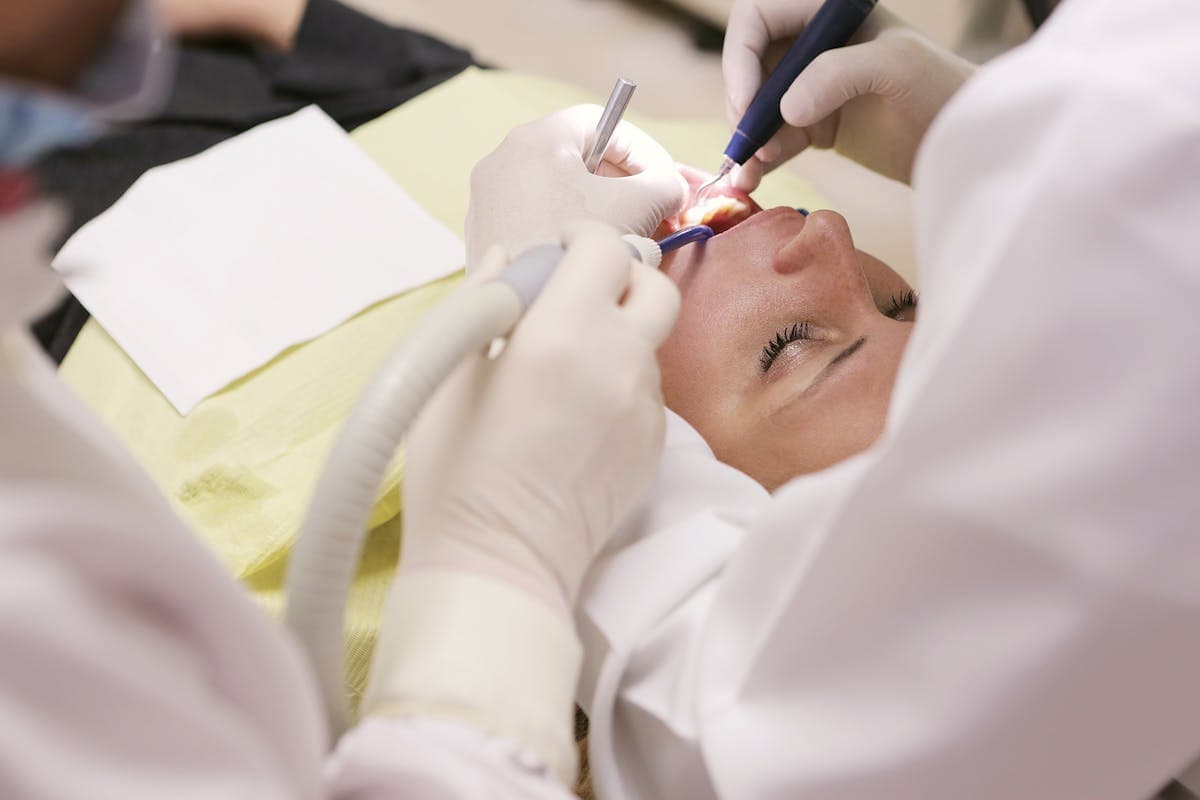
If you’ve spent years going from doctor to doctor with jaw pain, ear discomfort, unexplained headaches, or facial pressure, and been told there’s nothing wrong with you, you are not alone, and you are not making it up. Dr. J. Ladd Williams, an AACD Accredited Member who has treated TMJ patients in Mesa for more than 30 years, puts it plainly: “I’ve seen so many sad cases of people told they’re crazy, that there’s nothing wrong with them, that it’s all in their head. Patients went from specialist to specialist wondering if they had cancer, an ear infection, vertigo, high blood pressure, or a psychological issue.” In most of those cases, the real cause was a structural problem in the temporomandibular joint that was simply being missed.
This article explains why TMJ/TMD (temporomandibular joint dysfunction) gets misdiagnosed so often, what symptoms doctors most commonly mistake it for, and how proper evaluation by a dentist trained in bite analysis and 3D joint imaging finally identifies the real problem, and the real solution.
The Emotional Reality of Living With Misdiagnosed TMJ
One of the most rewarding parts of the work at this practice is helping people who have been dealing with chronic jaw and facial pain for years, sometimes a decade or more, without anyone taking them seriously. The relief on their faces when they finally know they’ve been heard, that they are not crazy, that there actually is a structural problem and most importantly that there is a solution. That is why the practice takes TMJ so seriously.
If you’re reading this and any of that sounds familiar, please understand: chronic TMJ pain is real, it is physical, and it is treatable. Previous doctors likely weren’t looking in the right place with the right tools.
What TMJ Actually Is
The temporomandibular joint is the hinge that connects your lower jaw to your skull, one on each side of your face, just in front of your ears. It’s an unusual joint because it both rotates and slides, and it works in coordination with the muscles of mastication, the cartilage disc inside the joint, the alignment of your teeth, and even the position of your head and neck. When any of those elements falls out of harmony, the joint can become painful, click, lock, or refer pain to surrounding areas.
Because the joint sits so close to the ear and shares nerve pathways with the sinuses, neck, and the side of the head, the symptoms it produces are easily confused with completely different conditions.
Conditions TMJ Is Most Commonly Mistaken For
| What you were told | What it might actually be |
|---|---|
| Recurring ear infection or “swimmer’s ear” | Pain referred from the TMJ to the ear canal, common because the joint sits millimeters from the ear |
| Chronic sinus pressure | Muscle tension in the masseter and temporalis muscles mimicking sinus pain |
| Migraine or tension headache | Trigger points in the chewing muscles referring pain to the temple, forehead, or behind the eye |
| Anxiety, stress, or “psychosomatic” pain | Bruxism (unconscious clenching) producing real muscle damage; the anxiety may be the result, not the cause |
| Vertigo or inner-ear imbalance | Disc displacement in the joint affecting balance signals |
| “Just stress” or “you’ll grow out of it” | An untreated bite imbalance that gets worse over time, not better |
| A possible psychological condition | A measurable structural problem visible on Cone Beam 3D imaging |
Why So Many Doctors Miss TMJ
Most primary care physicians, ENT specialists, neurologists, and even some general dentists are not trained to evaluate the temporomandibular joint as a complete biomechanical system. Standard medical imaging, like a 2D X-ray or a routine MRI ordered without specific TMJ protocols, often doesn’t show the joint disc, the soft tissue surrounding the joint, or the relationship between the bite and the joint position. Without that complete picture, the most common conclusion is “there’s nothing wrong,” when in reality, the right tools weren’t being used.
Diagnosing TMJ correctly requires:
- A detailed clinical exam: palpating the joint and muscles, measuring jaw range of motion, listening for clicks or pops, observing how the jaw deviates when opening
- A Cone Beam 3D CT scan, which produces a true three-dimensional view of the joint, the position of the condyle, the cartilage disc when visible, and the bony anatomy
- A complete bite analysis: mapping how the upper and lower teeth come together, where premature contacts occur, and how the chewing forces are distributed
- An evaluation of the muscles of mastication, including the masseter, temporalis, and pterygoid muscles, which can refer pain to surprising places
- A medical history that connects the dots, including any history of orthodontic treatment, dental trauma, whiplash, or chronic stress patterns
It’s only when all of these pieces are evaluated together that the structural problem becomes visible. And once it’s visible, it becomes treatable.
Real Symptoms of TMJ That Doctors Often Dismiss
If you’ve experienced several of the following, especially if they cluster together or wax and wane, TMJ is a likely candidate, even if previous evaluations came back negative:
- Jaw pain or soreness, especially in the morning or after long phone calls
- Clicking, popping, or grating sounds when opening or closing the mouth
- The jaw temporarily “locks” open or closed
- Ear pain or fullness with no infection found
- Ringing in the ears (tinnitus) that doctors can’t explain
- Headaches that start at the temples or behind the eye
- Facial pain that follows the path of the chewing muscles
- Neck and shoulder tension that doesn’t respond to massage
- Worn, chipped, or sensitive teeth from clenching or grinding
- A bite that feels “off” or like the teeth don’t meet correctly
- Dizziness or balance issues that ear specialists can’t pin down
Not every patient has every symptom. But when several appear together and no other clear cause is found, the joint and the bite deserve a serious look.
The Diagnostic Process at Our Mesa Office
When a patient comes in believing they may have TMJ, or having been told repeatedly that they don’t, the evaluation is thorough and patient-centered:
- Full history. We take time to understand the timeline, what’s been tried, what doctors have said, and what makes the pain better or worse.
- Hands-on clinical exam. Palpating muscles and joints, measuring range of motion, observing jaw movement and bite.
- Cone Beam 3D imaging. Our in-office scanner produces a complete three-dimensional view of the joint anatomy that traditional dental X-rays simply cannot show.
- Bite analysis. Mapping the occlusal contacts to identify where forces are unbalanced.
- Differential diagnosis. If something doesn’t fit the TMJ picture, we refer out rather than force a diagnosis.
By the end of that evaluation, most patients have a clear, evidence-based picture of what’s happening in their joint, why their symptoms appear when they do, and what realistic treatment options exist.
Treatment Once the Real Problem Is Identified
Once TMJ is correctly diagnosed, there is almost always a path forward. Relief depends on the severity of the dysfunction. A custom night guard helps with tooth sensitivity and muscle soreness in many cases and is often the first step. When there are bony issues or damage to the cartilage in the joint, other treatments may be needed: anti-inflammatory medications, Botox injections to relax overactive muscles, repositioning splints, orthodontic movement to correct the bite, or in advanced cases, full mouth reconstruction to bring the muscles, teeth, and joint back into harmony.
For a deeper look at how TMJ treatment escalates from a night guard to more involved interventions, see our companion article on when a night guard isn’t enough. For the foundational overview of TMJ symptoms, causes, and our overall approach, see our main TMJ Treatment in Mesa, AZ guide.
Why a Cosmetic and Restorative Dentist?
Many people are surprised to learn that a cosmetic and restorative dentist, not a neurologist, ENT, or pain specialist, is often the right professional to diagnose and treat TMJ. The reason is straightforward: TMJ is fundamentally a problem of how the bite, the muscles, and the joint work together.
Dr. Williams’s training at the Pankey Institute for Higher Learning and over three decades of clinical practice in restorative dentistry have built a deep familiarity with occlusion (how teeth come together), the muscles of mastication, and the structural relationships that drive TMJ symptoms. Combined with the Cone Beam 3D imaging available in our office and the broader resources of full-mouth restorative treatment when needed, we can both diagnose accurately and offer a complete range of treatment options under one roof.
Schedule a TMJ Evaluation in Mesa, AZ
If you’ve been struggling with jaw pain, ear discomfort, unexplained headaches, or any of the symptoms above, and you suspect TMJ may have been overlooked, the team at J. Ladd Williams Cosmetic Dentistry would be glad to take a careful look. Call J. Ladd Williams Cosmetic Dentistry at (480) 964-9020 to schedule an evaluation, or visit our contact page to request an appointment online.
Our office is located at 1244 N. Greenfield Rd., Ste. 103, Mesa, AZ 85205, and we welcome patients from Mesa, Scottsdale, Phoenix, Gilbert, Chandler, and throughout the East Valley.
Frequently Asked Questions
Can TMJ be misdiagnosed as anxiety or stress?
Yes, frequently. The unconscious clenching and grinding (bruxism) that drives many TMJ cases produces real muscle damage and real pain, but the symptoms, such as facial tension, headaches, sleep disruption, and jaw soreness, are often attributed to anxiety. In many cases the anxiety is the result of chronic pain, not the cause. Treating the structural problem typically reduces both.
Why does my ear hurt if I have TMJ?
The temporomandibular joint sits just in front of the ear canal, only millimeters away, and shares some of the same nerve pathways. Inflammation or muscle tension in the joint commonly refers pain into the ear, which is one of the most frequent reasons TMJ is mistaken for an ear infection. When an ENT examines the ear and finds nothing wrong, the joint is the next place to look.
Will an MRI or X-ray show TMJ?
Standard 2D dental X-rays don’t show the joint clearly, and a routine MRI ordered without specific TMJ protocols often misses the disc and surrounding tissue. The gold standard for visualizing the joint structurally is a Cone Beam 3D CT scan combined with a clinical bite analysis. We perform both in our Mesa office.
Can TMJ cause vertigo or dizziness?
Yes. Disc displacement and muscle dysfunction in the temporomandibular joint can affect the inner ear and the proprioceptive signals that govern balance. Patients who have been seen by ear specialists for unexplained vertigo are sometimes found to have a structural TMJ problem at the root.
How long does it take to feel relief after starting TMJ treatment?
For patients whose symptoms come primarily from muscle tension and bruxism, a properly fitted night guard can reduce morning soreness and headaches within a few weeks. For patients with disc, cartilage, or significant occlusal problems, treatment is staged and relief comes over months as each layer is addressed. Honest expectations are part of the process, and we’ll always tell you what to expect.
Why didn’t my previous dentists or doctors find TMJ?
TMJ requires a specific combination of clinical examination, 3D imaging, and bite analysis to diagnose accurately. Many general practitioners aren’t trained to evaluate the joint as a complete biomechanical system, and standard imaging often doesn’t visualize the soft tissue inside the joint. The diagnosis isn’t subjective; it just requires the right tools and training, which not every clinician has.