
Dental Implants in Mesa, AZ: A Permanent Solution for Missing Teeth
By Dr. J. Ladd Williams, DDS, AACD Accredited Member | Last reviewed: April 2026
Losing a tooth — whether from decay, injury, or gum disease — can affect far more than your appearance. It can change the way you chew, speak, and even how your remaining teeth align over time. Dental implants have become the gold standard for tooth replacement because they’re the only option that replaces both the root and the crown, giving you a result that looks, feels, and functions like a natural tooth. According to the American Association of Oral and Maxillofacial Surgeons, implants have a success rate of up to 95%.
At J. Ladd Williams Cosmetic Dentistry in Mesa, Arizona, Dr. Williams uses advanced technology — including our Cone Beam 3D scanner — to plan and place dental implants with precision. With over 30 years of experience in both restorative and cosmetic dentistry, he takes a comprehensive approach to ensure every implant blends seamlessly with your smile.
What Are Dental Implants?
A dental implant is a small titanium post that is surgically placed into the jawbone to serve as an artificial tooth root. Once the implant integrates with the bone — a process called osseointegration — a custom crown is attached to the top, creating a complete, natural-looking replacement tooth.
Unlike dentures or bridges that sit on top of the gums, implants are anchored directly in the bone. This gives them the stability and strength of a natural tooth, and it also helps preserve the jawbone, which can deteriorate when a tooth is missing.
Types of Dental Implants
Depending on how many teeth you’re missing and your overall oral health, Dr. Williams may recommend one of several implant approaches:
Single Tooth Implants
The most common type. One titanium post replaces one missing tooth, topped with a custom porcelain crown. This is ideal when you have one gap and the surrounding teeth are healthy — there’s no need to alter adjacent teeth the way a traditional bridge requires.
Implant-Supported Bridges
When you’re missing two or more adjacent teeth, an implant-supported bridge uses two implant posts to anchor a bridge of connected crowns. This eliminates the need for a traditional bridge that relies on neighboring teeth for support.
All-on-4 / Full-Arch Implants
For patients who have lost most or all of their teeth, the All-on-4 technique uses just four strategically placed implants to support a complete arch of teeth. This approach can often be done in a single day and provides a fixed, permanent alternative to removable dentures.
Mini Dental Implants
Smaller in diameter than traditional implants, mini implants are sometimes used to stabilize a lower denture or in situations where bone volume is limited. They require a less invasive procedure and often have a shorter recovery time.
Am I a Good Candidate?
Most adults with one or more missing teeth are good candidates for dental implants. During your consultation at our Mesa office, Dr. Williams will evaluate several factors:
- Jawbone density: Adequate bone is needed to support the implant. Our Cone Beam 3D scanner provides a detailed three-dimensional view of your bone structure that traditional X-rays simply can’t match.
- Gum health: Active gum disease must be treated before implant placement to ensure the best outcome.
- Overall health: Conditions like uncontrolled diabetes or heavy smoking can affect healing and implant success rates.
- Commitment to oral care: Implants require the same daily brushing, flossing, and regular checkups as natural teeth.
If bone loss is a concern, bone grafting procedures can often build up the area to support an implant. Dr. Williams will walk you through all of your options during your evaluation.
The Treatment Process: What to Expect
Getting an implant typically involves several stages spread over a few months. Here’s what to expect:
Step 1: Consultation and 3D Imaging
Your first visit includes a thorough exam, digital X-rays, and a Cone Beam 3D scan. Dr. Williams uses this imaging to assess your bone structure, nerve locations, and sinus proximity — then creates a precise surgical plan.
Step 2: Implant Placement
The titanium post is placed into the jawbone during a minor surgical procedure. Most patients report that the procedure is more comfortable than they expected. A temporary restoration may be placed while the implant heals.
Step 3: Osseointegration (Healing)
Over the next 3 to 6 months, the implant fuses with the surrounding bone. This integration is what gives implants their remarkable stability and longevity. During this time, you’ll have follow-up appointments to monitor healing.
Step 4: Abutment and Crown Placement
Once the implant has fully integrated, an abutment (connector piece) is attached, followed by a custom-crafted porcelain crown. Dr. Williams takes great care to match the color, shape, and size of the crown to your surrounding teeth — so the result looks completely natural.
Dental Implants vs. Other Tooth Replacement Options
Understanding how implants compare to other options can help you make an informed decision:
| Feature | Dental Implant | Dental Bridge | Removable Denture |
|---|---|---|---|
| Looks like a natural tooth | Yes | Yes | Somewhat |
| Preserves jawbone | Yes | No | No |
| Requires altering adjacent teeth | No | Yes | No |
| Stability when eating | Excellent | Good | Fair |
| Average lifespan | 25+ years (often lifetime) | 10-15 years | 5-10 years |
| Daily removal needed | No | No | Yes |
| Typical cost (per tooth) | Highest initial investment | Mid-range | Most affordable upfront |
How Much Do Dental Implants Cost in Mesa, AZ?
The cost of dental implants varies based on several factors unique to each patient, including:
- Number of implants needed
- Whether bone grafting is required
- Type of restoration (single crown, bridge, or full arch)
- Material choices for the crown
Because every case is different, Dr. Williams provides a detailed cost estimate during your consultation after reviewing your 3D imaging and treatment needs. Many dental insurance plans now offer partial coverage for implants, and we offer financing options to make treatment more accessible.
Why Choose J. Ladd Williams?
Dr. Williams brings a combination of technical skill and aesthetic vision to every implant case. As an accredited member of the American Academy of Cosmetic Dentistry — a credential held by fewer than 500 dentists worldwide — he understands that a replacement tooth needs to do more than just function. It needs to look right.
His approach includes:
- Cone Beam 3D imaging for precise surgical planning
- Custom-matched porcelain crowns that blend with your natural teeth
- A conservative treatment philosophy — recommending implants only when they’re truly the best option for your situation
- Coordination with specialists when complex cases require oral surgery or periodontal expertise
Dr. Williams is a member of the American Dental Association, the Arizona Dental Association, and the Academy of Operative Dentistry. He has been serving patients in Mesa and throughout the East Valley since 1994.
Caring for Your New Teeth
One of the greatest advantages of implants is that they’re maintained just like natural teeth. To keep your implants in top condition:
- Brush twice daily and floss around the implant
- Schedule regular dental checkups and cleanings
- Avoid chewing on hard objects (ice, pens, hard candy)
- Wear a night guard if you grind your teeth — Dr. Williams can create a custom appliance to protect both your implants and natural teeth
With proper care, dental implants can last a lifetime. In Dr. Williams’ experience, patients who maintain good oral hygiene and keep up with their regular visits enjoy decades of reliable function from their implants.
Potential Risks and Considerations
Dental implants are one of the safest and most predictable procedures in dentistry, but like any surgical procedure, there are potential risks to be aware of. These include infection at the implant site, nerve damage causing numbness or tingling, sinus problems when upper jaw implants protrude into sinus cavities, and implant failure if osseointegration does not occur. These complications are rare — especially when the procedure is planned with advanced 3D imaging and performed by an experienced provider. Dr. Williams discusses all potential risks during your consultation so you can make a fully informed decision.
See Real Patient Results
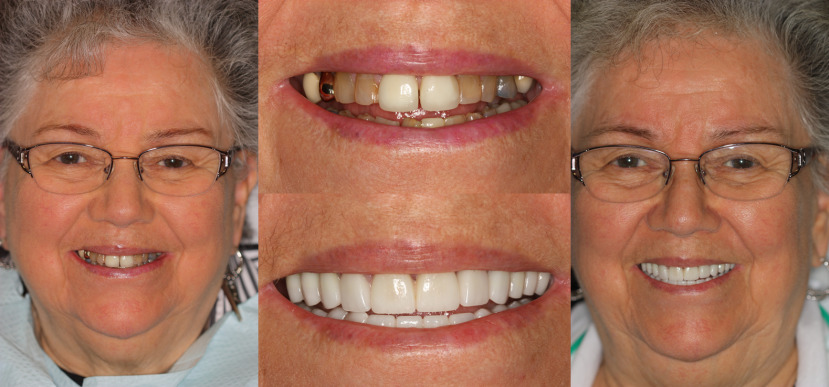
Seeing the results of actual implant cases can help you understand what’s possible. Visit our before-and-after gallery to view smile transformations completed at our Mesa office. If you’re considering implants as part of a larger cosmetic plan, learn about smile makeovers and how implants fit into a comprehensive approach.
Schedule a Consultation in Mesa, AZ
If you’re missing one or more teeth and want to explore whether dental implants are right for you, we’d be glad to help. Call J. Ladd Williams Cosmetic Dentistry at (480) 964-9020 to schedule a consultation, or visit our contact page to request an appointment online.
Our office is located at 1244 N. Greenfield Rd., Ste. 103, Mesa, AZ 85205, and we welcome patients from Mesa, Scottsdale, Phoenix, Gilbert, Chandler, and throughout the East Valley.
Frequently Asked Questions
How painful is dental implant surgery?
Most patients are surprised by how comfortable the procedure is. Local anesthesia keeps you pain-free during placement, and post-operative discomfort is typically managed with over-the-counter pain relievers. Most patients return to normal activities within a day or two.
How long do dental implants last?
With proper care, the titanium implant post can last a lifetime. The porcelain crown on top may need replacement after 15 to 25 years due to normal wear, but the implant itself is designed to be a permanent solution.
Can I get dental implants if I have bone loss?
Often, yes. Bone grafting procedures can rebuild the jawbone to support an implant. Dr. Williams uses Cone Beam 3D imaging to evaluate your bone structure and determine whether grafting is needed before implant placement.
Does dental insurance cover implants?
Coverage varies by plan. Many dental insurance plans now offer partial coverage for implants, and some patients also have medical insurance benefits that apply. Our team will help you navigate your coverage and discuss financing options.
How long does the entire implant process take?
From initial consultation to final crown placement, the process typically takes 4 to 8 months. Most of that time is the healing period while the implant integrates with the bone. The actual surgical and restorative appointments are relatively quick.
What happens if I don’t replace a missing tooth?
When a tooth is missing, the surrounding teeth can shift out of position, your bite can change, and the jawbone in that area begins to deteriorate. Over time, this can lead to additional tooth loss and changes in facial structure. Replacing a missing tooth promptly helps preserve your oral health and appearance.